

This Egyptian Seafood Monger Serves Herring & Onigiri
Herringa’s founder built Egypt’s herring brand from her own kitchen table, lost it to grief, rebuilt it from scratch, and is now smoking Norwegian salmon and prepping onigiri for shelves across Cairo.

When founder and CEO Abeer Shouky was studying in Malaysia, the Egyptian dish she craved most wasn’t koshary or molokhia. It was herring.
Abroad, herring came cured and composed, but back home, it meant a trip to El Fasakhani, a messy paper wrap, and a smell that followed you into the car. “It’s never a bougie-style herring in Egypt,” she says. So she decided to make one herself.
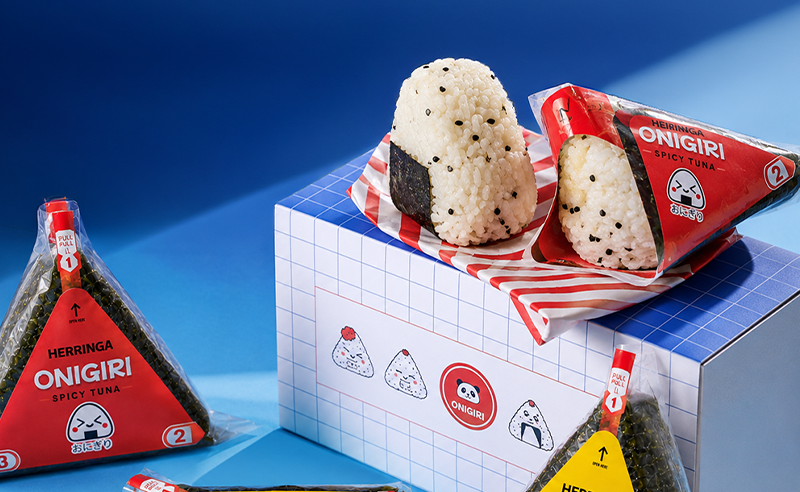
That decision, made from a home kitchen in 2020, is now Herringa: a seafood brand with its own smokery, a frozen retail line in stores across Egypt, deals with Talabat and Breadfast, a growing NDA-bound private-label business, and an onigiri product she says is headed for convenience store shelves.
From Furniture to Food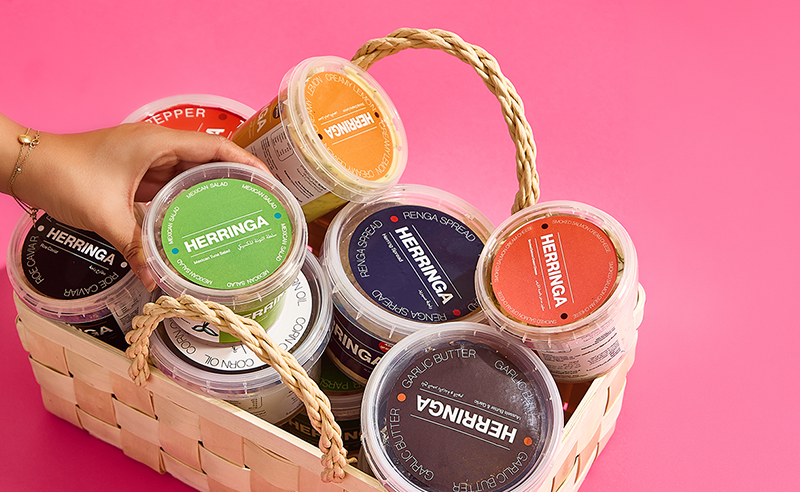 Shouky didn’t plan any of this. She started a degree in product at Staffordshire University in the United Kingdom, then transferred to Malaysia to study in Kuala Lumpur.
She graduated as a furniture designer, but along the way, she shifted to the food and beverage industry instead, first cutting and caramelising onions at a burger chain at 19, then working as a junior marketer for a milk brand navigating Malaysia’s religious sensitivity around cows.
“I discovered I love the food and beverage industry in general,” she says.
She came back to Egypt and took a job building the menu and identity for Fetiret Dina Farms instead. “It boomed,” she says.
Then, she left to build something of her own.
At home, she kept returning to the same question: what did she actually miss when she was abroad? Herring, unglamorous and undervalued, was never something her generation would admit to craving.
She decided that was the perfect opportunity.
New Beginnings
Herringa started as a Facebook page in 2020, selling herring salads to friends and neighbours during Egypt’s COVID-19 lockdowns. The first month brought in EGP 5,000. Two months in, that number hit EGP 100,000 — all made from Shouky’s own kitchen, filleting fish and mixing sauces by hand.
Then her father was diagnosed with cancer and died. She fell into depression, stopped working on the brand entirely, and took a conventional job instead. “I just became an employee and that’s it,” she says.
But her brother pushed back, not wanting to let her give up on her dreams. “He was like, ‘I never felt like you could be a 9-to-5 employee,’” she recalls.
It took her a year, starting in 2023, to rebrand Herringa from scratch, with new research and development, family surveys and contributions from her family toward packaging costs. By 2024, she had taken on a cloud kitchen and started selling salads on Talabat. The kitchen went over capacity almost immediately.
“I never thought it would be a brand selling all year,” she says. She had assumed demand would live and die with the Easter holiday, when Egyptians traditionally eat herring.
From there, growth compounded fast: an offer to operate out of a factory-owned kitchen with its own license, deals with Talabat, Breadfast, Royal House, and Gourmet Egypt, and private-label bagel partnerships she can’t name. “I can’t mention names because there’s non-disclosure agreements, but we’re behind one of the most famous bagel companies in Egypt,” she says.
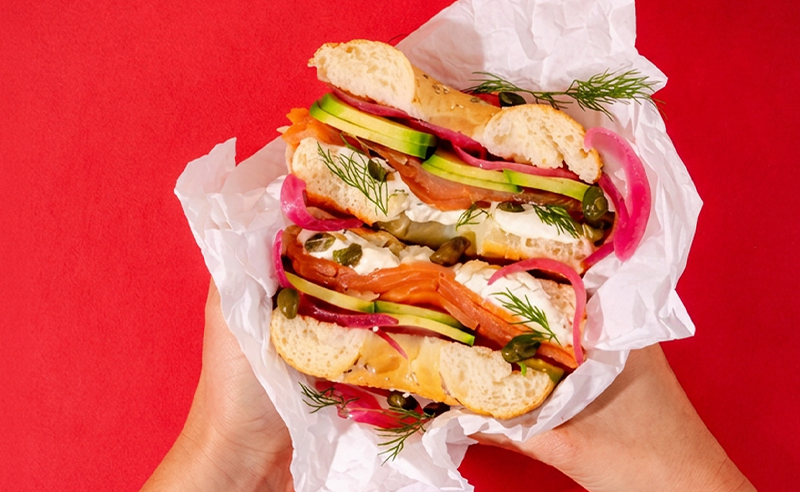
Salmon Sells Best
Herring remains Herringa’s identity. The Dutch-sourced fish is smoked in Egypt and often paired with tahini, in what Shouky calls a distinctly Egyptian way of eating it. But the actual bestseller is salmon, sourced from Norway and smoked entirely in-house.
“We do not buy from a supplier,” she says.
Mussels come from Greece, shrimp from the UAE, India, and Thailand, and all are processed through the same factory kitchen that now also runs Herringa’s frozen retail line.
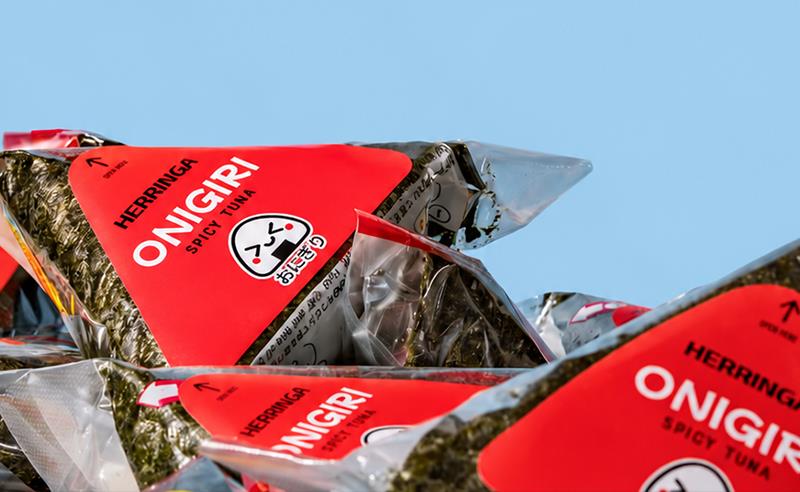
The goal, as Shouky describes it, is to make seafood in Egypt as easy to snack on as it was for her in Japan, where she lived on crab sticks, sashimi and 7-Eleven onigiri.
“We love sushi. The whole country loves sushi now. And it’s affordable. It should be everywhere.”
A seafood restaurant is on the roadmap, and so, eventually, is an international launch, starting with London, where Shouky says the plan is to sell herring the way Egyptians actually eat it, not a diluted version of it.
“Our main goal at Herringa is to make seafood available anytime, anywhere, ready to eat,” Shouky says.
The Women Behind the Fish
The company’s other defining factor is who built it. Herringa’s first employee was Shouky’s housekeeper, who offered to sit and debone fish by hand because Shouky couldn’t yet afford pre-filleted salmon.
That woman brought in others: single mothers, widows, women looking for their first job. For a long time, Shouky’s mother, sister, cousins, and mother-in-law ran the operation from their kitchen. “It’s always been about the girls gathering and supporting a girl like me,” she says.
Scaling into a factory made an all-women operation harder to sustain, particularly on overnight shifts. But the morning shift, Shouky says, remains entirely staffed by women.
She’s candid about what it has cost her personally to operate in what she calls a male-dominated field: sourcing fish still means facing suppliers who question why they're speaking with a woman. “It wasn’t easy for me to begin with,” she says. Until now, this remains a challenge for her.
But Shouky doesn’t frame any of it as a hardship story. “I did not suffer at all, to be honest,” she says. “I’m just grateful for everything.”
What started as a craving turned into a company built to make room for women in a field that historically hasn’t had any, and it all starts with herring.
- Previous Article Where to Find the Best Kimbap in Cairo - A SceneEats Guide
- Next Article We Let a Dog Named Croissant Rate Zamalek’s Croissants
Related Articles
Trending This Month
-

-
 Sep 12, 2026
 -
-