

Inside the Kitchen of Egyptian Food Content Creator Ramy Elgazar
The first Arab to win the US Sumo Open now runs a street food joint in California, and he swears the ultimate pre-training meal is koshary with kebda.

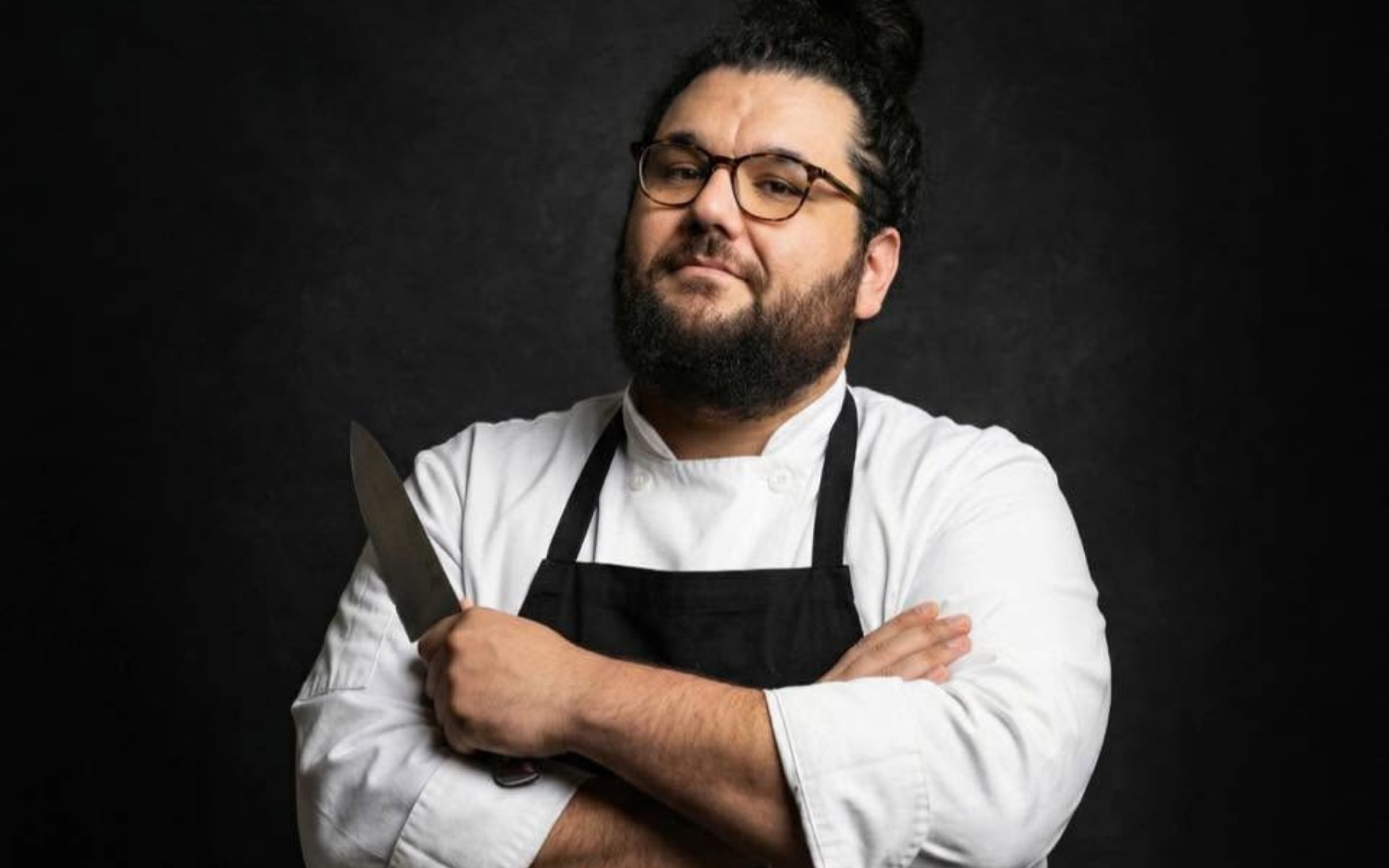
When Ramy Elgazar describes himself, he doesn't pick one thing. "I'm [a] sumo wrestler," he says. "Also, I'm [an] actor. And I do YouTube videos," the list growing longer as he laughs. People hear it and assume he's exaggerating, but he isn't.
The Egyptian-American built his whole life around discipline, and discipline doesn't seem to care which direction he points it.
The sumo part is real, and it matters. Elgazar became the first Egyptian and Arab to win the heavyweight title at the U.S. Sumo Open in 2015. He still talks about that win like he's replaying it frame by frame. Ask him about food, and the same intensity turns up in a different key.
Elgazar grew up in Al-Mahalla, in the Egyptian countryside, the only boy in the house alongside one sister. He started cooking around seven or eight, before sumo entered the picture. The family kept chickens on the roof, and when he came home on leave from training with Egypt's national wrestling team and found the house empty, he'd climb up, kill one, and make himself dinner.
"I keep cooking for myself all this time," he tells SceneEats. The habit started out of necessity and never left. After he moved to the U.S., where he now coaches the national sumo team and serves as a federation trustee, he kept cooking, this time for friends. They'd ask him to make their food whenever he visited, finish the plate, and tell him the same thing every time: he had to start posting this.
He wasn't doing much with a camera yet outside of sumo. That changed on a shoot with chef and YouTuber Nick DiGiovanni. Elgazar made him a dish and mentioned, almost as an afterthought, that he had a passion for food too. DiGiovanni didn't brush it off. He said he could see a light in Elgazar's eye when he cooked, and pushed him to post it.
The first video Elgazar uploaded pulled half a million views in two hours. "I think it's really big deal," he says. "So let's focus on this."
Word spread among friends first. Handmade frozen sausages, classic Egyptian dishes people kept asking him to remake. Before he ever thought of it as a business, he was making upwards of 200 pounds of food a week out of his own kitchen.
That instinct now has a name and an address: Sumo Guy, his street food joint in Long Beach, California, where he makes Eastern-style sausage from premium ingredients and a signature spice blend, chasing what he calls the true taste of traditional Eastern sausage.
He's also got strong opinions on the ultimate sumo fuel, and it isn't beef and rice. Ask him for the perfect pre-training meal and he'll tell you, without missing a beat, that it's koshary with kebda, Egypt's national carb bomb topped with liver. Heavy enough to carry a 200-pound frame through hours of training, and Egyptian enough that there's no separating his food sense from where he's from.
Ask him directly how sumo and food connect, and he doesn't hesitate either. "Both need to have a line to walk in," he says. Sumo needs a goal and a structure built to reach it, where you wake up, train, eat, sleep and repeat on a schedule that doesn't bend for anyone. Cooking runs on the same logic. A recipe is another disciplined path to a result.
It shows up in the smaller details too. Elgazar still eats on a schedule that would break most people. A kilo of steak with rice and vegetables at noon, something lighter like smoked salmon later, a small snack before 7pm, doubled portions on competition days.
He does it because after two decades in the sport, that rhythm is simply how he's built, not because a coach is standing over him. The training and the cooking have run together the entire time, each one feeding the other.
- Previous Article Seaside Dining Spot Mazi Finds a Home at the Edge of the North Coast
Related Articles
Trending This Month
-

-
-
 Jun 16, 2026
 -