


Dining in the Dark Forced me to Experience Food in a Way I Never Had
There’s a hesitation that comes with not seeing what you’re about to eat that I hadn’t experienced before.

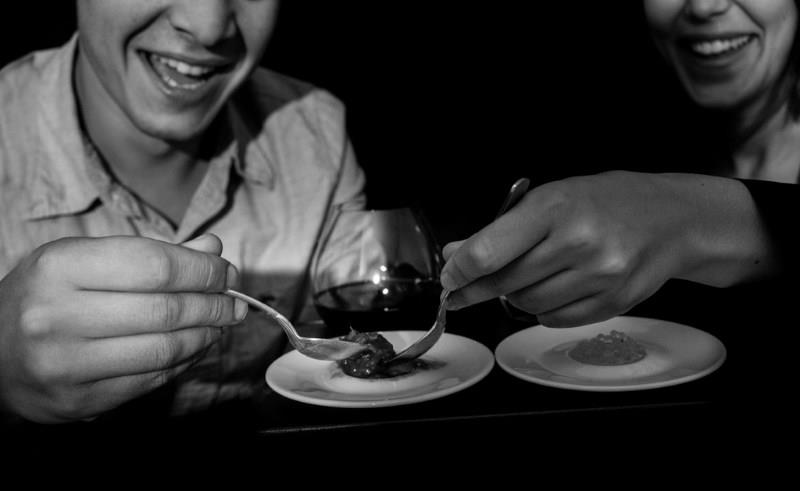
As I made my way down a dimly-lit street a few short kilometres east of the Giza Plateau, my mind began to wander about what I would be eating on the night. I will confess, I am a picky eater. I’ve never been overly adventurous with food. Considering the circumstances, however, the menu should have been the least of my concerns.
I was about to spend the remainder of my evening having dinner in complete darkness. I signed up for this experience willingly, with only a few details revealed before going, through Dans Le Noir — a culinary concept created in France where, as the name suggest, you eat in the dark. Contrary to my eating habits, I am always up for an interesting adventure. This was shaping up to be just that.
The man who first greeted me showed me to a brightly-lit room adorned with traditional rugs and ancient Egyptian ornaments. The walls surrounding me all covered in reviews of the experience, hand written on papyrus. A wooden table in that room held books dedicated to information about the blind and hard-of-seeing individuals. Dans Le Noir promises a culinary journey through the heart of ancient Egypt that intends to be a sensory, human experience. So far, everything checked out.
The space felt like a briefing room disguised as a waiting area in the way everything seemed to be nudging you toward taking this seriously. The handwritten notes, the books, the setup all of it working a little too hard to make sure you understood that this was more than just dinner.
I read a few of the notes on the wall. They all said roughly the same thing, just phrased differently. Life-changing. Perspective-shifting. A lot of reflection happening, apparently.
I wasn’t entirely convinced. Not yet anyway. I hadn’t yet realised that what I’d be experiencing was, in fact, much more than a surprise menu and a meal in complete darkness.
We were given a short explanation before going in. Phones away, obviously. No light, and nothing that can glow in the dark. We’d be led in by a blind host. The idea was simple enough; take sight out of the equation so food becomes the focal point, and, in some capacity, understand what it means to navigate the world without seeing it.
It sounded straightforward when it was explained.I was asked to stand behind my host, placing my right hand over his left shoulder. Then we walked in. It did not feel straightforward when it started.
There’s a slight adjustment period before being plunged into complete darkness. Each hallway we walk through gets progressively dimmer, giving your eyes a chance to get used to it. Then, the light is gone and you’re helped to your chair. I immediately reached out for something after sitting down — anything — and found absolutely nothing.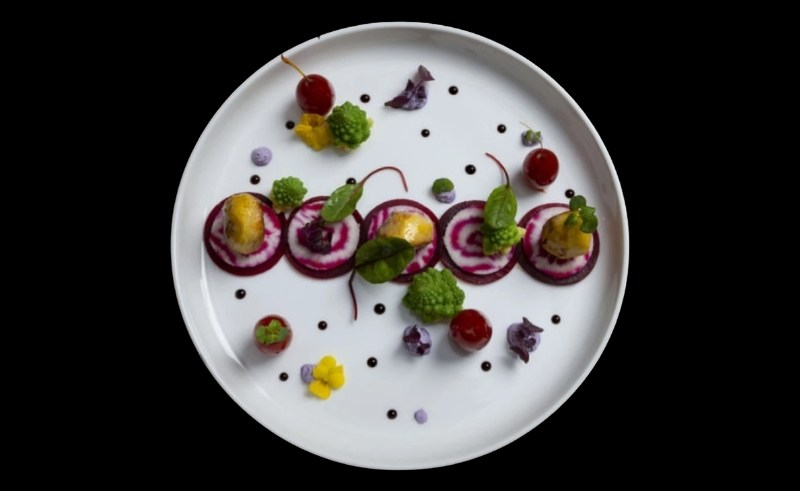 My host, on the other hand, moved like there was nothing unusual about any of this. Or that’s what I could sense from the sound of his footsteps. I eventually figured out where the table was and placed both hands on it, trying to get a sense of where things were. I located the cutlery first. That felt important. Fork, spoon, napkin, but there was no knife. Probably for the best.
I’d already been told that the menu was inspired by ancient Egyptian agriculture. The food was made from ingredients and dishes that likely would have existed in some form thousands of years ago, reworked into something you’d serve in a restaurant now.
It was put together in collaboration with Egyptologist Salima Ikram, which made it feel more considered than a themed menu you’d see anywhere else. In spirit of the surprise aspect of the menu, I’ll omit details of the food itself.
None of that context helped once the food arrived. The second the plate was in front of me, I forgot everything. All I could think of was that I had no idea what I was looking at. Or rather, not looking at.
The first bite took longer than it should have. I wasn’t trying to savour it. I was trying to figure out how to approach the physical act of putting food in my mouth. When I tried to eat, I ended up dropping most of what was in my spoon onto my clothes.
There’s a hesitation that comes with not knowing what you’re about to eat that I hadn’t really experienced before.
I went in cautiously. It wasn’t bad. That was my first clear takeaway. Beyond that, it was mostly guesswork. Scent first, then texture,, then flavour. Trying to piece it together in reverse. I thought I recognised something, then immediately doubted it. Did that matter? Not really, but I kept doing it anyway.
At some point, I realised I was overthinking it. Without sight, everything slows down. You take longer to find things. You second-guess simple movements. Even reaching for water becomes a small task you have to think through.
The food, though, became the only thing you can actually focus on. Simply because there’s nothing else competing with it.
When it ended, I was led back out the same way we came in. One hand on the shoulder in front, moving slowly, waiting to be told when to stop.
The light, when it came back, felt aggressive. The same room we started in looked different, even though nothing had changed. Or maybe it was just easier to focus on things now.
The experience was transformative. It completely shifted how I think about food, perception, and a lot of other things. And it did make one thing surprising: how much of eating has very little to do with taste.
Presentation, expectation, recognition, all the things I rely on without thinking about it, were gone. And without them, I wasn’t suddenly better at experiencing food. Or anything else.
In fact, I was significantly worse. And I think that was the point.
Related Articles
Trending This Month
-
-
-
 Sep 21, 2026
 -
 Sep 21, 2026