


How Baba Baris is Bringing Egyptian Street Food to Paris
From taameya sandwiches to Upper Egyptian kofta, Baba Baris is part of a new generation of Paris restaurants spotlighting Egyptian cuisine and reconnecting the diaspora with the flavours of home.

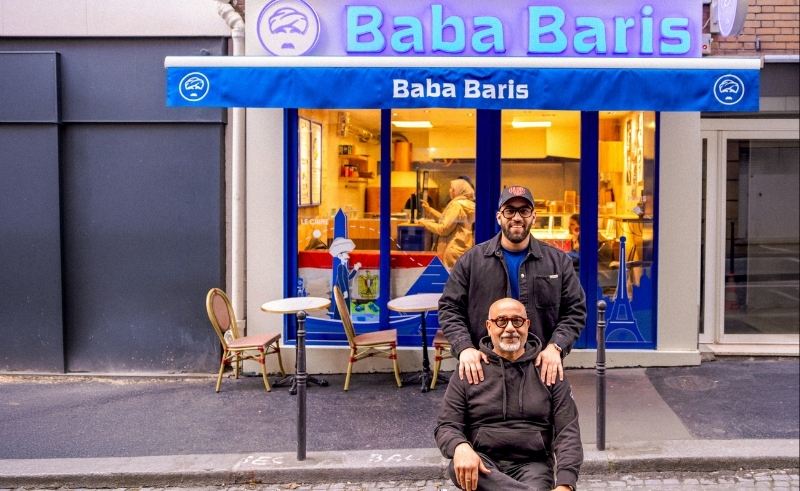
The streets of Paris have more in common with the streets of Cairo than you might think—from the monuments that have been exchanged between both nations (some more willingly than others), to the bustling community of Egyptians and Arabs that have called France their new home. But one thing that is conspicuously absent from public spaces across Paris, where tens of thousands of Egyptians live, is Egyptian street food.
On a casual window shopping spree, you might be able to buy crepe, a hot dog, a burger, pizza, gelato, banh mi, and even Levantine options that are a little closer to home like falafel and man'ouche. But something as specifically Egyptian as hawawshi? Non, habibi, c'est difficile. For decades, such cravings could only be satisfied in the private kitchens of the Egyptian diaspora, lovingly prepared by family and shared amongst friends, but rarely appearing on restaurant menus. Baba Baris is part of a new generation changing that.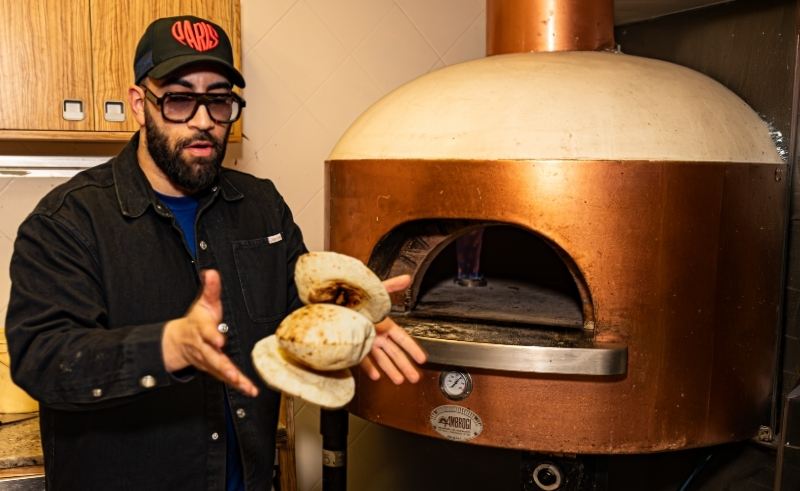 Founded by Mickael Waseli, the Paris concept serves Egyptian street food with a clear purpose: bringing the flavours of Cairo into the open while telling the story of the community that carried them abroad.
Trained in economics and finance, Waseli spent years working in stock markets and macroeconomic research while quietly building Baba Baris on the side. “I’ve always been someone who juggles several lives at once—studies, work, and building something of my own,” he tells SceneEats. “Baba Baris didn’t come after a career. It ran alongside everything else.”
The roots of the project, however, stretch back to his father’s story.
His father arrived in Paris in the early 1980s, part of a small Egyptian diaspora navigating a city where the community was barely visible. “At the time there were barely 400 Egyptians in the entire city,” Waseli explains. “Most of them undocumented, trying to find their place.”
Work opportunities were limited, and many immigrants entered construction. His father instead found a path through restaurant kitchens, starting in Italian establishments before moving into French ones, learning the trade step by step.
Egyptian food, however, rarely made its way onto menus.
“The cuisine that nourished us was kept at home,” Waseli says. “Almost as if it needed to apologise for existing in Paris.”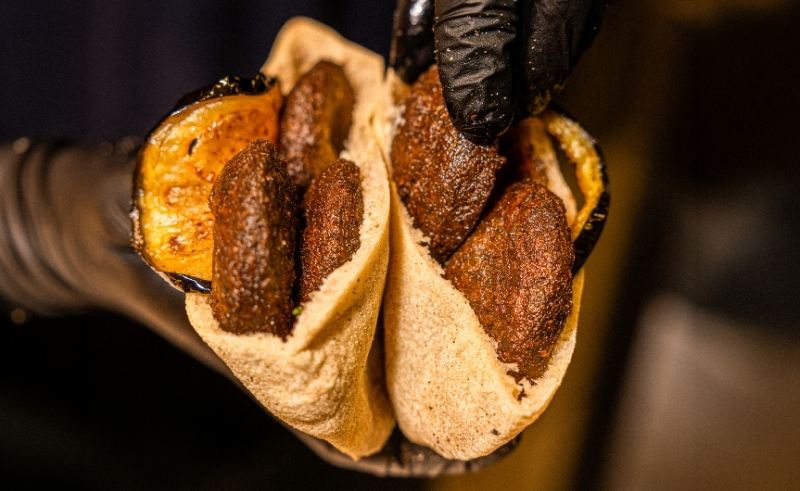 Waseli remembers one moment in particular when his parents tried introducing molokheyya as a special at their restaurant. The reaction from diners was lukewarm, and the dish never returned.
“That memory never left me,” he says. “Every plate we serve today is a quiet reversal of that moment.”
The idea for Baba Baris crystallised years later during a wedding in Egypt. Standing in front of the buffet, Waseli noticed something that stayed with him.
“There were cuisines from all over the world on the table,” he recalls. “And almost none from Egypt itself.”
Back in Paris, he began noticing the same contradiction from the other direction. French audiences were fascinated by Egypt’s civilisation and mythology, yet most had no idea what Egyptians actually ate.
“The only reference point most people had was Levantine food,” he explains. “Lebanese and Syrian cuisine had been present in Paris for decades. Egypt had no such bridge. We had to build our own—from scratch, one sandwich at a time.”
The restaurant’s name reflects that mission.
“Baba Baris is a tribute to my father,” Waseli says. “And to every Egyptian father who crossed the Mediterranean with a dream bigger than his suitcase.”
Even the logo carries that intention. At its centre stands a Saidi man wearing a traditional turban, a reference to Upper Egypt and to Waseli’s grandfather.
“The Saidi is not the Egypt that fills the tourist brochures,” he says. “He is the Egypt that remembers who it is.”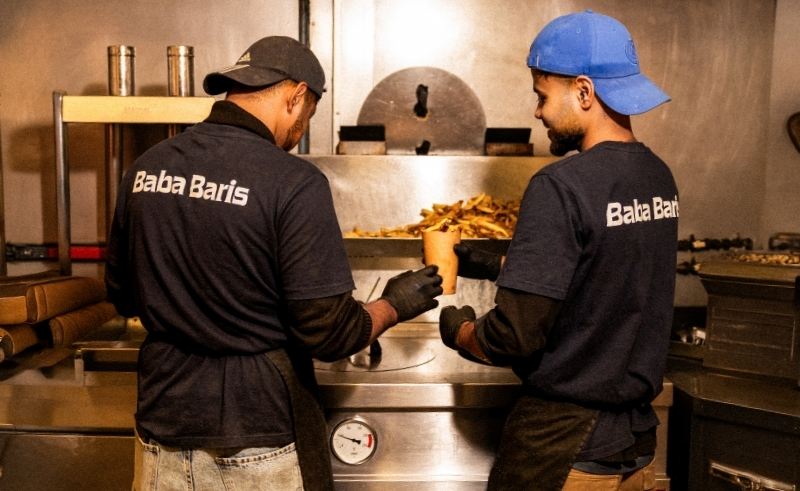 If Egyptian cuisine was once nearly invisible in Paris, that is beginning to change. Alongside restaurants like Elbi and Kocha, Baba Baris is part of a small but growing movement introducing the country’s food traditions to the city.
“Egyptian cuisine was nearly invisible here,” Waseli says. “Part of the reason is that the community never fully claimed it publicly. People ate at home. The street remained for others.”
For Waseli, Egyptian street food is defined less by presentation than by what it represents.
”It doesn’t come dressed up on a fancy plate,” he laughs. “It arrives wrapped in paper, handed to you through a window—and it’s perfect.”
That simplicity reflects the culture of Egyptian street cooking.
“Think of the fuul cart in Cairo before dawn,” he says. “It serves the construction worker, the man leaving the mosque after Fajr, the night owl heading home from church. Hunger doesn’t ask what class you belong to.”
At Baba Baris, that philosophy shapes the entire approach.
“My ambition has always been to serve the construction worker and the lawyer with the same quality, the same respect, and the same price.”
The menu begins with the dishes that define Cairo’s street life—food eaten early in the morning, late at night, or anywhere in between. One of the most important is taameya, Egypt’s version of falafel made with fava beans rather than chickpeas.
“In Paris most people have only encountered falafel that’s been sitting for hours,” Waseli says. “Ours is fried fresh to order—crispy outside, bright green inside. Once you taste it that way, there’s no going back.”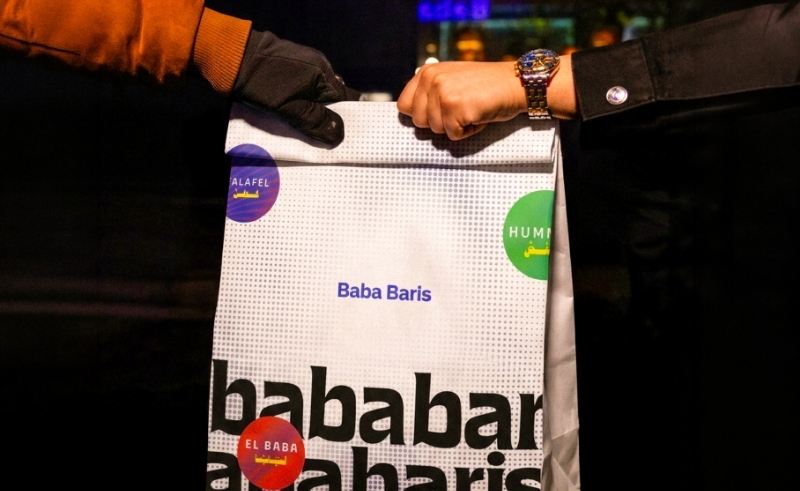 Another standout is the kofta sandwich known as the Guedo. The name and the recipe are both a tribute to his grandfather. “It’s spiced beef and lamb grilled the way he used to make it,” Waseli explains. “The soul of Upper Egypt in every bite.”
For Waseli, the growing number of Egyptian restaurants abroad reflects a broader shift.
“Egyptian food is having its global moment,” he says. “And I believe we’re only at the beginning.”
His long-term ambition for Baba Baris is to become a place Parisians return to instinctively—whether for a quick sandwich, a late-night meal, or a familiar taste of Cairo.
New ideas are already in development, including a reinterpretation of the Egyptian “caizer” burger. “I will collaborate closely with my sister Sandrine, who founded Rive Nil, a brand bringing Egyptian cotton to France. In our own ways, we are both sharing different expressions of Egyptian craftsmanship and culture here.” A future coffee concept is also being discussed with his sister Clara, centred around the classic Egyptian café question: “Teshreb eh?”—What would you like to drink?
Beyond the menu, Waseli sees Baba Baris as part of a wider cultural dialogue between Egypt and France.
“Egypt has always had a presence here—from Dalida to Egyptian music that still goes viral,” he says. “Food is just another way to continue that conversation.”
After decades of Egyptian cuisine being kept behind closed doors in Paris, Baba Baris is making sure those flavours finally have a place on the street.
“Paris is ready now,” Waseli says. “We made sure of it.”
Related Articles
Trending This Month
-
-
-
 Sep 21, 2026
 -
 Sep 21, 2026