

What if You Can Have Iftar in the 40s?
Food unfolds within a setting reminiscent of 1940s Egypt’s kingdom years when tarbooshes were a daily fixture.

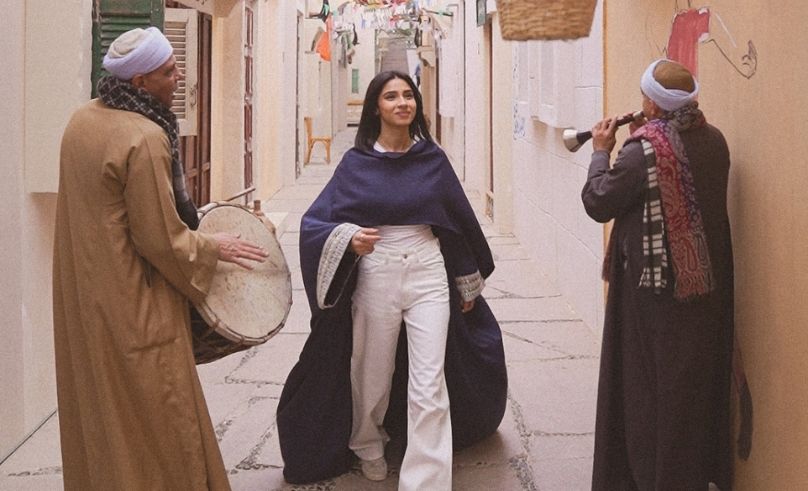
Among the first things you’ll notice after taking the first few steps into Ruya Club during Ramadan are the words ‘Long live the King’ painted in calligraphy on a wall in a recreated 1940’s style alleyway. You’re surrounded by stalls and shops most have only seen depicted on screens; an olfactory with flasks and mixers, a cafe whose walls are decorated with colonial-era cigarettes branding. Along its floors sit wooden chairs and shisha pipes, all beneath posters affirming the then-kingdom’s loyalty to its ruling family.
Walk a little further down the paved pathway and a women standing on a mashrabiya-style balcony drops a basket full of dates for you to take and break your fast with. It’s theatrical, sure, and the kitsch is ever-so apparent. But its charmingly tasteful and not at all like a theme park.
This felt more like stepping onto a film set midway through a black-and-white classic, except the crystal-glass chandeliers glow a silvery-pearl and the smell of kofta roasting on the charcoal cuts through the air.
The alley ends with a theatre-style ticket booth and opens into a courtyard dressed in lanterns, wooden chairs with woven backs, tables laid out with velvet red cloths, scalloped porcelain plates and heavy cutlery that feels intentional in your hand. Even the water glasses and ash trays are ribbed, catching the light like something borrowed from your grandmother’s cabinet.
Ruya Club in Sheikh Zayed has built its Ramadan setting as a theatre, serving as a living postcard to 1940s Egypt’s kingdom years, when tarbooshes were a daily fixture and alleyways felt like entire worlds.
Just before the athan, a cannon blast sounds, signaling the end of the fasting day. The call to prayer follows immediately after cutting cleanly through the noise. For a brief second the entire set holds still.
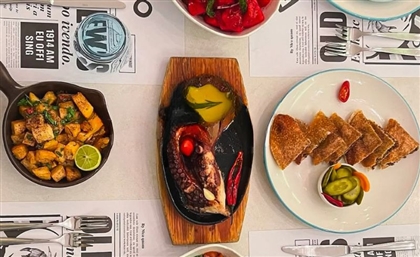
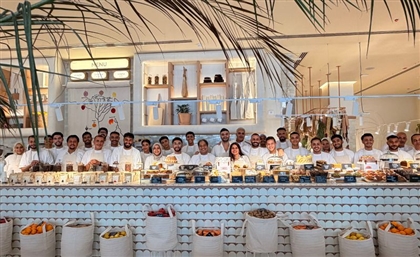
As we make our way to the designated buffet line, we’re greeted with cauldrons of lentil and orzo soups. A display of salads, breads, and mezze that leans classic sits directly beside it, with tightly-wound vine leaves recognised as the star of the section.
The mains are unapologetically Egyptian. To start, slow-cooked beef with onion, dawood kofta simmered in a tangy tomatoey sauce, char-grilled chicken, fereek, and, of course, rice with vermicelli. The food is homey and hearty, the kind made for the hunger that Ramadan sharpens into something ceremonial.
Between the buffet lines, the music takes its turn. Live renditions of Abdel Halim Hafez backed by delicate oud strings and tabla beats ring across the courtyard from in front of the structured stages bright-red curtains, anchoring you in time as the singer lets the notes linger the way the decade did. Waiters in robes swerve between tables, topping up tiny cups of coffee thick as ink.
Dessert leans into nostalgia and tradition. Kunafa, Om Ali and Qataeyf sit at the end of the main course buffet, enticing you to make a trip back through the flowerbeds and pass by the wall plastered with paintings of the royal family.
What Ruya gets right is the pacing of the night. You’re not shuffled through the evening. You’re allowed to sit with it instead and look up at the faux-balconies and lit-up trees while watching strangers take photos under a sign that insists the king is still very much alive.
It would be easy for a concept like this to tip into caricature. The references are affectionate and no detail is sparred. Somewhere between the first date dropped from above and the last sip of cardamom-laced coffee, you realise the nostalgia isn’t only about the 1940s, its about a slower kind of gathering, one where dinner and music become a reminder to share memories among friends and strangers.
- Previous Article Ayadina Celebrates 13 Years of Lebanese Ramadan Nights
- Next Article Mediterranean Restaurant Almería is a Living Archive in Cinema Radio