

Teta Loula’s Cookbook Translated a Grandma’s Instinct Into 55 Recipes
How a granddaughter conquered her fear of mahshi and turned her grandmother’s recipes into a book where 55 recipes meet folk stories, playlists, and the occasional half-cup of ghee.
Growing up in an Egyptian household, you learn to love certain things from a distance. You smell them and are immediately magnetised, your feet running to the kitchen to grab a taste before it ever hits the table - a spoon dipped into a pot when no one is looking. You might not so clean-girl-energy indulge at the table, but physically, that is as close as you will ever get to your teta's rua'aa, the potatoes with meat and bamya that arrive in a clay pot, the steam curling up like a secret. The idea of even attempting to make these dishes is blasphemous, culinary suicide coded, not one that crosses your mind. I have personally made multiple jokes about the possibility of these dishes dying with my mum and grandma. It is not even an admission of being a failure in the kitchen - though that is debatable - but I have cooked everything from stir-fries to Thai curries to pasta in every possible sauce, some of them made up on the spot. Egyptian food, though? You love it with the ferocity of someone who knows they will never make it. These dishes belong to the women who came before us; they are not ours to spoil…
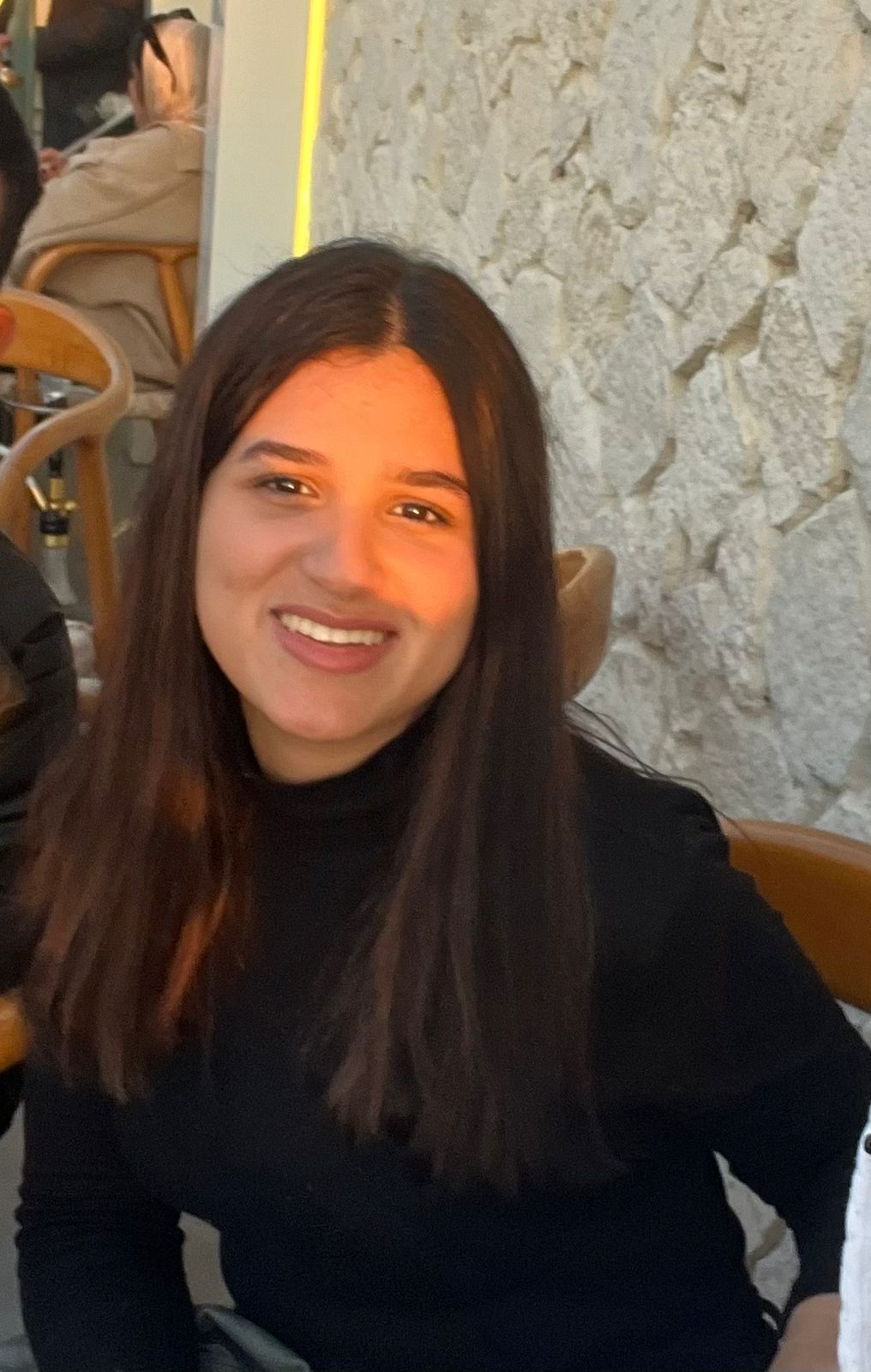
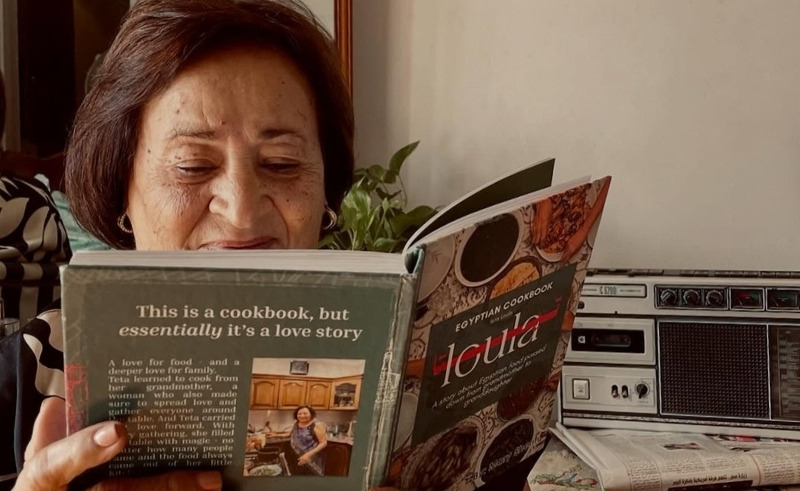
Mary Sherif knows this fear intimately. She has spent years cooking everything but the forbidden territory. She dabbled in marketing, ran a rooftop venue, connected startups to investors, did the whole corporate dance until she was fed up. Through all of it, she never once attempted to make mahshi. And then she started spending time with her grandmother, which naturally entailed time in the kitchen.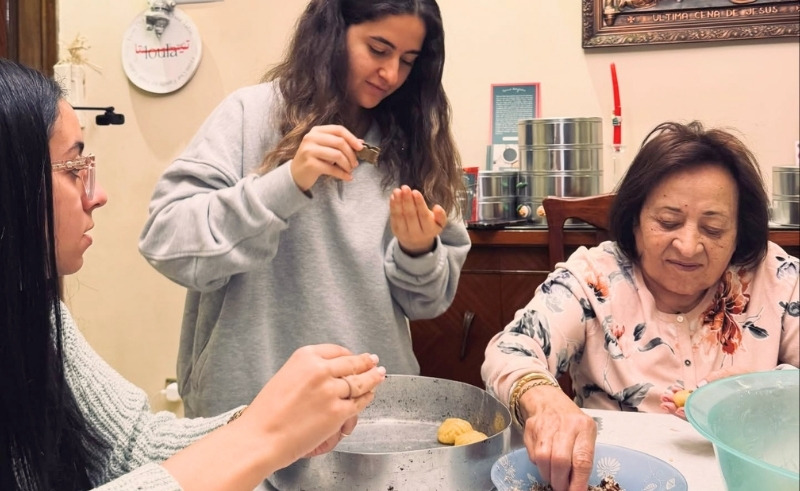 The grandmother in question—known affectionately as Teta Loula—belongs to that generation of Egyptian cooks who operate without the faintest interest in measuring spoons. She learned from her own grandmother, a woman who gathered the entire family around one small kitchen and filled it with warmth. Teta Loula carried that magic forward: feeding everyone, always making a little extra, always turning simple ingredients into specialties, amassing families and friends. “I was scared,” Mary says. “I felt that this was her territory, but I just wanted to sit with her and learn a little.” Through this Mary and her cousin Mariam Hany created Teta Loula: the name on the cookbook, pop-up dinners, and cooking classes—and also the woman who inspired it.
So she sat. Her grandmother did not teach so much as exist in her element while Mary watched and tried to understand how anyone could be so certain. “When I look at her cooking,” she says, “she cooks. She doesn't measure salt. She doesn't measure anything. There are no measuring cups. That's another thing I was scared of. That I wouldn't know. Because how will we ever put a framework on what's happening?”
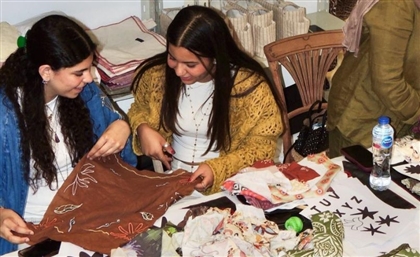
“I’ve spent my whole life making this food,” Teta Loula says. “It was always just normal to me. But now, seeing it reach people like this, I feel a kind of amazement I’ve never felt before, as if I’m discovering these recipes for the first time.”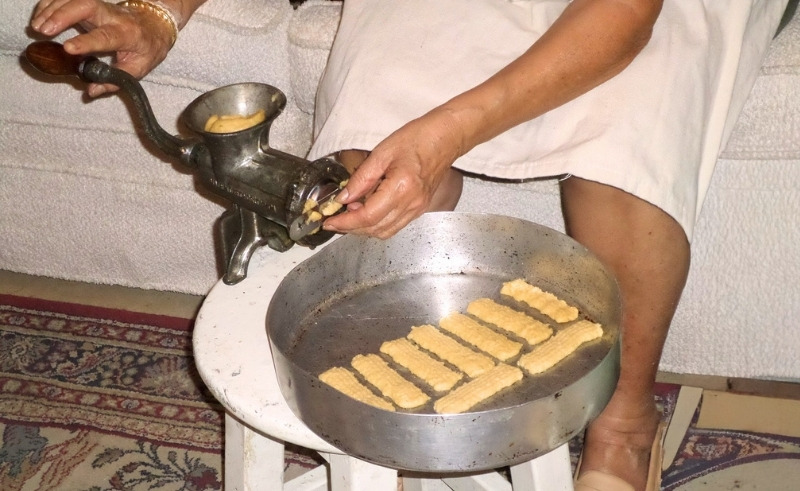 The framework came later. At first, they thought of a restaurant. Then Mary, drawing on her startup days, thought of bringing international entrepreneurs to Egypt for retreats, with cooking classes as one of the experiences. Teta Loula was very excited about cooking classes, so naturally they started there (you never say no to your grandma). In early 2025, they held one at Bellies En-Route in West El Balad. The earliest sessions were intimate affairs: small groups gathered around a kitchen table while Mary and her grandmother demonstrated the choreography of preparing a meal.
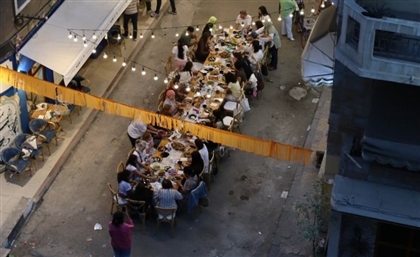
“She loved the cooking classes,” Mary says. “But they’re very tiring. We had to think about how to make it sustainable.” Pop-up dinners followed. These evenings offered guests the chance to taste the dishes exactly as they are cooked at home - recipes unchanged, though the presentation occasionally receives a thoughtful adjustment.
“Sometimes people come and stare at me in the club, for example,” Teta Loula says with a laugh.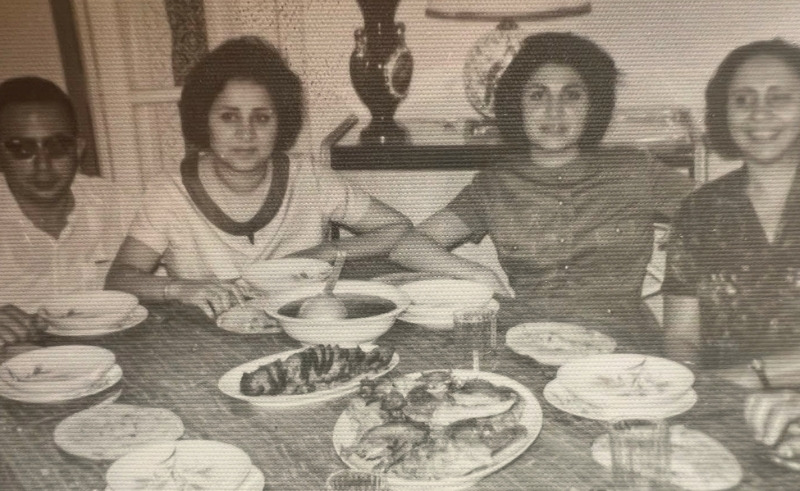 But still, it was not 100% sustainable, and the thought came: what if they made a book? “I told her, do you know how to write the recipes?” Mary says. “She took a piece of paper and a pen and she wrote all her recipes. Little by little, she was adding recipes. Until we reached all the things in the book.” Mary began translating the instructions into something other people might be able to follow. That process required patience; after all, the language of instinct does not easily convert into measurements. “When she writes ‘two tablespoons of ghee’, it doesn’t mean two tablespoons,” Mary says. “It’s something completely different. It might actually be half a cup.”
Salt proved more elusive still. “The hardest thing to learn was balancing it,” she explains. “Everything has salt. The onions have salt. The filling has salt. The sauce has salt. I only started getting it right when I tasted the stuffing before I used it.”
Mary started researching the backgrounds of the dishes—the folk stories, the things people say. She added history notes, fun facts, the kinds of stories that get passed down alongside the food. She drew doodles for each chapter, little drawings that sit behind the recipes. She made playlists. The book became a love letter. “I realised the ingredients are very simple,” she says. “But everything is layered. I wanted to know why we eat what we eat.” She had considered publishing with a company. They wanted to take a huge cut and change the designs. “I know I am not a professional. But I still want to be in charge of this. I wanted to make sure that my ideas are translated into the book. Even if it is not professional.”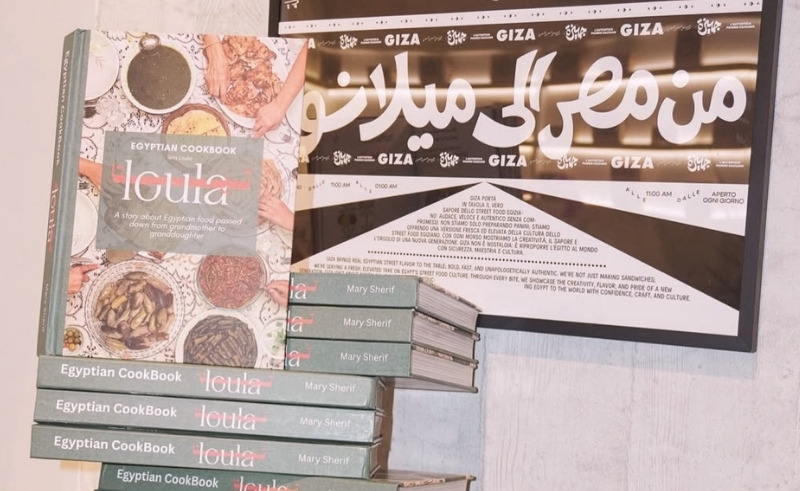 “When Mary told me,” Teta Loula says, “I did imagine the recipes translated to text, but not this beautifully.”
“My favourite moment of this journey was seeing the cookbook for the first time on my birthday,” Teta Loula says. “I could hardly believe it was real, and also the day I met Mahmoud Saad for the TV interview. It gave me a push that made me believe in myself a bit.”
The book was completed in 2025: fifty-five recipes scattered across seven chapters, Teta’s tips tucked in like whispered secrets, folk stories woven between the pages to remind you that every dish has a history, and every history is worth keeping. Since then, it has travelled further than either of its authors expected, finding readers abroad and quietly expanding the world of Teta Loula. It is now shipping across Egypt, the United States, the United Kingdom, Australia, and Europe. It has found shelves in London, Milan, Amsterdam, and scattered across Cairo - in Zamalek, Garden City, Maadi, Downtown, in the shadow of the pyramids. A cookbook passed down from grandmother to granddaughter, written for Egyptians at home and abroad, and for anyone curious about what happens in an Egyptian kitchen when no one is watching.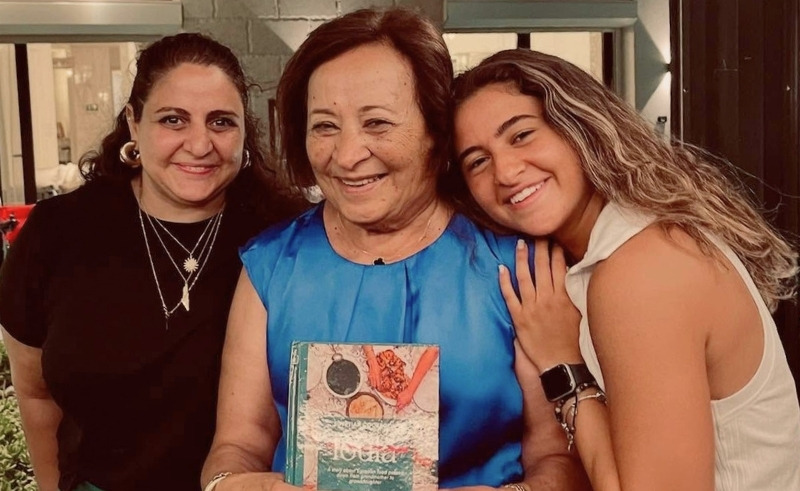 Here is where the fear creeps back in, only this time wearing a different face. Mary is scared. She gets emotional. At Teta Loula’s first book signing, she was super emotional. Her grandmother is very happy. Her life has become more dynamic. But underneath it all, there is something heavier.
“I feel like I expose the family somehow to a world like that,” she says. “I'm afraid of the comments. I'm afraid that something will happen. Because I feel that this is the family legacy. I cannot be casual about it. I feel this is also a responsibility. To represent my family well while representing Egyptian food in general.” The thing she started because she wanted to learn from her grandmother has become something else. A cookbook. A business. A platform. A weight.
There is a common misconception in Egyptian households, and it goes something like this: Teta’s food is the meal that will make you gain weight. The fat. The oil. The slow-cooked richness. Mary grew up believing this. Then she started cooking with her grandmother and learned otherwise. We have indulged in everything from burgers to fried chicken, so it is not really that food’s fault we did not hit our summer goals for a third consecutive year. “The fat was good from the beginning,” she says.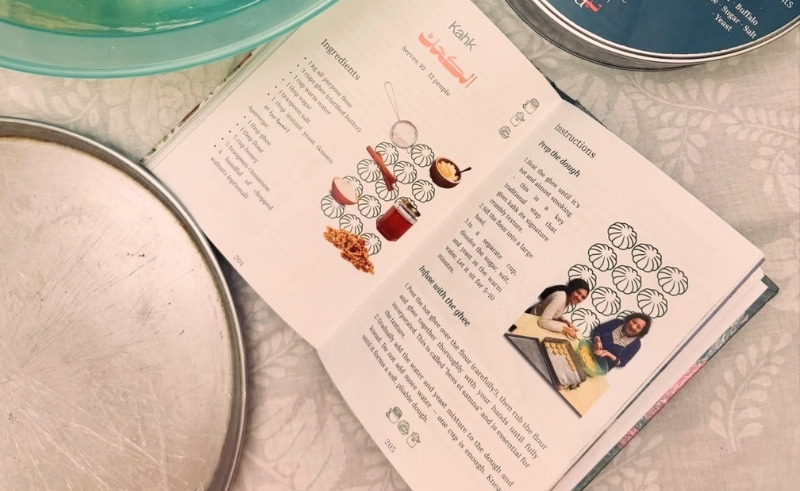 The food that kills you. The food that sustains you. Somewhere in the middle, there is a woman who has been cooking for decades and has never once worried about any of it.
She is still taking notes. She wants the next versions of the book to be more accurate, so people do not have any problems with the Egyptian kitchen. She is working on an Arabic version. She is thinking about accessibility, about how to make the pop-ups and the dinners available to more people. She is figuring it out as she goes.
“My biggest pride is in my granddaughters,” Teta Loula says.
These recipes have been passed down for generations: from Teta Loula’s grandmother to her, from her to Mary, and now from Mary to anyone who opens the book. For so long, these dishes lived behind a glass case - admired, adored, tasted only when someone else made them. Somewhere in Cairo, or London, or Melbourne, someone is about to open Teta Loula for the first time. They will read the recipe for molokhia and hesitate. And then they will try. Maybe the rice will be a little too salty. Maybe the leaves will tear. Maybe they will call their mum in a panic, and she will laugh and tell them it is fine, and somewhere in the background their grandmother will say something about how it is the intention that counts, the love that goes into it, the fact that you tried at all.
- Previous Article Little Lexie’s Pops Up at 5A Ahead of Swanlake Opening
- Next Article Mediterranean Restaurant Almería is a Living Archive in Cinema Radio